

Science

Intent:
At Beeston Primary, we nurture children’s natural curiosity and encourage them to explore, question and discover the world around them.
Science inspires pupils to ask meaningful questions and investigate how things work. Through engaging, hands-on learning, children develop their understanding of a wide range of scientific concepts, including living things, materials, forces, light, sound, electricity and the solar system.
Our curriculum promotes scientific enquiry, helping pupils to think critically, make discoveries and build their knowledge through practical investigation. As they explore the disciplines of Biology, Chemistry and Physics, children gain a deeper understanding of the world and their place within it.
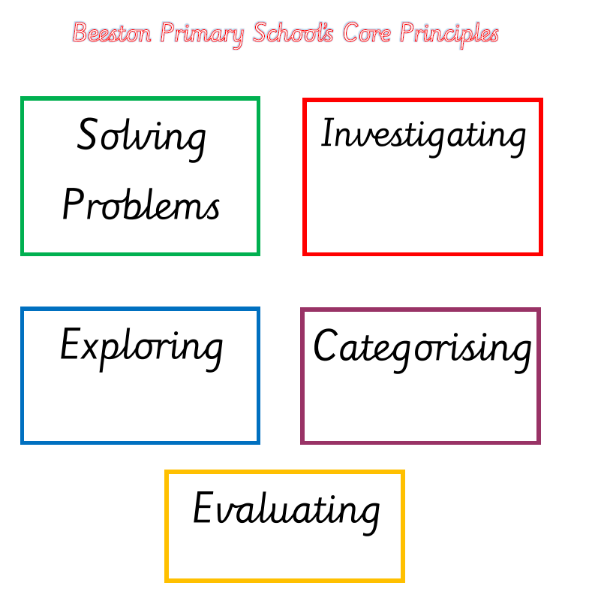
Throughout their scientific journey, pupils develop key skills such as observation, problem-solving and investigation, alongside important qualities including resilience, perseverance and collaboration. We aim to inspire confident, curious learners who are proud of their achievements and eager to learn more
Implementation:
Through the National Curriculum 2014 and White Rose Scheme, Science at Beeston aims to:
- Inspire a love of science through exciting, engaging and memorable learning experiences.
- Develop curiosity by placing scientific enquiry at the heart of every lesson and linking learning to the characteristics of effective learners.
- Build on prior knowledge, using knowledge organisers to introduce key vocabulary, concepts and scientific understanding.
- Promote the confident use of scientific vocabulary to deepen understanding and communication.
- Showcase high-quality learning through science journals and class dojo that document pupils’ progress over time.
- Develop essential scientific skills, including observing, predicting, investigating, questioning, interpreting, communicating and hypothesising, alongside accurate measurement and the effective use of technology.
- Enable pupils to record, present and analyse findings using tables, graphs and charts.
- Encourage critical thinking by evaluating investigations and considering how methods and results can be improved.
- Empower children to design and lead their own investigations, fostering creativity and independence.
- Promote collaboration through shared enquiry and teamwork.
- Develop respect and responsibility for the living and non
- Living world, encouraging children to care for their environment.
Impact:
- All children will leave Beeston Primary School with a secure understanding of all aspects of science, which will prepare them for their future science education.
- Through staff meetings, drop-ins and CPD, children will receive high-quality teaching.
- Children can ask scientific questions.
- High-level vocabulary is used in discussions and written work.
- Children have a broad knowledge of different scientists, male and female and from different ethnic backgrounds, promoting science capital.
- Visits and practical work during ‘Science Week’ and throughout the year result in a positive atmosphere around school and a thirst for learning from the children.